Toward the Promised Land
前往应许之地
所有向外的探索,都是向内的寻找。
所有极致的远行,都是为了回家。
About
展览前言
在人类历史的长河中,“远行”从来不只是地理意义上的移动。它更像是一种反复出现的结构:离开、漂泊、失落、召唤,以及归返。
从古希腊史诗中奥德修斯的漫长归途,到《圣经》中摩西带领族人穿越旷野,人类始终在两种力量之间摆动—一种是对未知的渴望,一种是对起源的执念。
而当这种古老的叙事,被投射到宇宙的尺度之上,“远方”第一次真正成为物理意义上的深空,“应许之地”,也从神话与信仰,转译为一个尚未抵达的坐标。
在《前往应许之地》系列中,艺术家将太空探索这一现代命题,与人类最古老的精神原型并置:史诗、宗教、迁徙与流放。火箭、舱室与星历轨道,不再只是技术的象征,而成为一套新的神话装置—承载着与古代同样的问题:我们为何出发?我们将去往何处?而我们是否仍记得归路?
人类的探索,从来不是单向的扩张,而是一种环形的运动。我们走得越远,越需要回答一个更古老的问题:我们从哪里来,又要回到哪里去。
也许,所有的星际航行,本质上都是一次奥德赛。而所谓“应许之地”,并不在宇宙的彼端,而在那条被拉得无限漫长、却始终未曾断裂的—归途之上。
Throughout the long arc of human history, “departure” has never been merely a movement through space. It is a recurring structure: leaving, wandering, losing, being called, and returning.
From the long homeward journey of Odysseus in ancient Greek epic, to Moses leading his people across the wilderness in the Bible, humanity has always oscillated between two forces—a longing for the unknown, and an attachment to origin.
When this ancient narrative is projected onto the scale of the cosmos, “distance” becomes, for the first time, the physical reality of deep space, and the “Promised Land” is translated from myth and faith into a set of coordinates not yet reached.
In Toward the Promised Land, the artist juxtaposes the modern project of space exploration with humanity’s oldest archetypes: epic, religion, migration, and exile. Rockets, cabins, and orbital trajectories no longer function merely as symbols of technology, but as components of a new myth-making apparatus—one that carries forward the same enduring questions: Why do we depart? Where are we going? And do we still remember the way home?
Human exploration has never been a linear expansion, but a circular motion. The farther we travel, the more urgently we are compelled to ask an older question: Where do we come from, and where do we return?
Perhaps every journey into the stars is, in essence, an odyssey. And the so-called “Promised Land” does not lie at the far edge of the universe, but along a path stretched to infinity—a path that has never truly been severed: the way home.
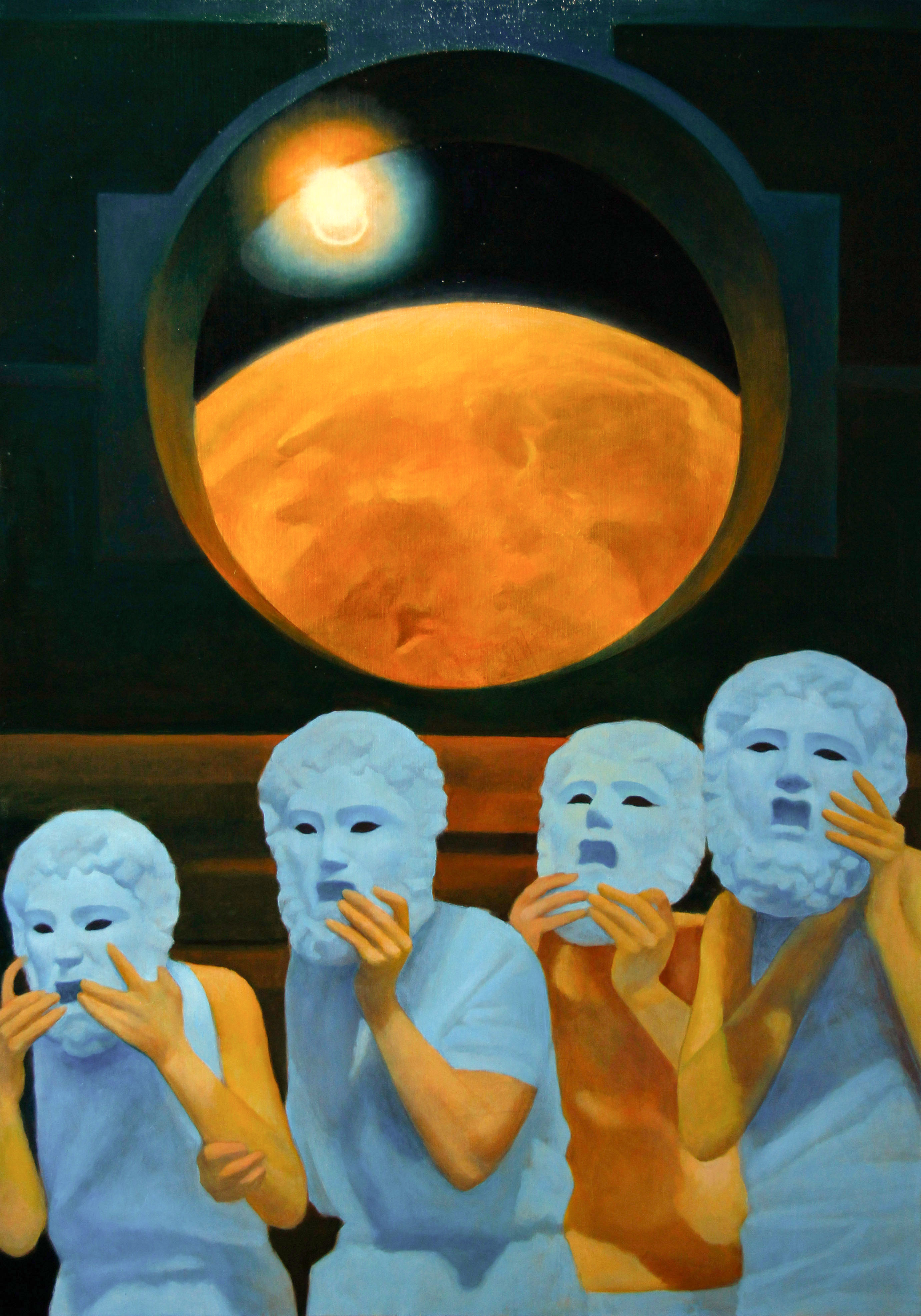
远地点上的奥德赛 Odyssey at Apogee
星途漫漫,如史诗里的漂泊。我们向宇宙出发,抵达最远的远地点,才看清回家的方向。在星历表的轨迹之上,续写一场文明的奥德赛。
远地点,是轨道上离原点最遥远的位置。我们驶向星际尽头,仿佛站在文明与故土最疏离的边缘。正如奥德修斯漂泊越久,归心越炽;人类飞得越远,越要回望来路。
舷窗外是未知深空,舱内的古希腊戏剧面具,是整个古代文明,凝练成的沉默面孔。飞向远地点,不是为了逃离,而是在最远之处,重新确认起点。
这场星海远征,看似奔赴未知,实则是漫长的归航。所有向外的探索,都是向内的寻找;所有极致的远行,都是为了回家。
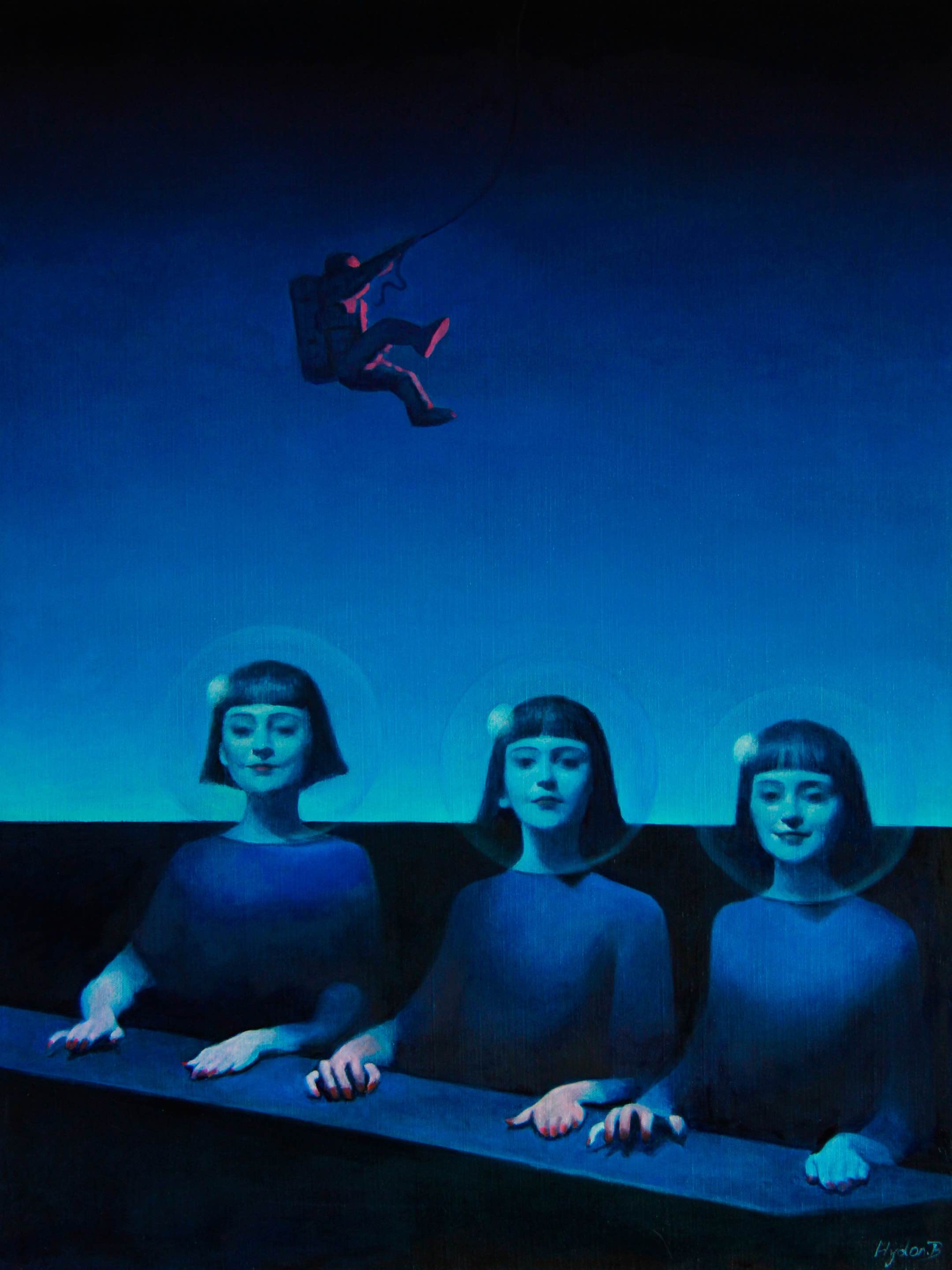
信徒与流放者 Believers and Exiles
守夜人在舱内低吟,远行者在星野闯荡。这是文明最古老的叙事:有人守着根脉,有人奔赴旷野,而歌声,是连接彼此的脐带。
深蓝舱室里,三位女性是文明的守夜人。她们以中古世纪歌者的姿态,用极简的节奏低吟—唱英雄的残章,唱历史的余响,唱儿女情长,也唱对未知的缄默。这是母亲与子嗣的抚慰,是故土对游子的温柔锚定。
舱外的漂浮者,是文明的远行者。他在荒芜的星野里闯荡,如同先民踏入原始丛林,带着对未知的渴望,也带着身后吟唱的回响。
太空并非新的荒野,它只是远古文明的另一种延续—有人留守,有人远行;有人低吟,有人闯荡。而所有的流放,终会被这低吟,牵回文明的母腹。
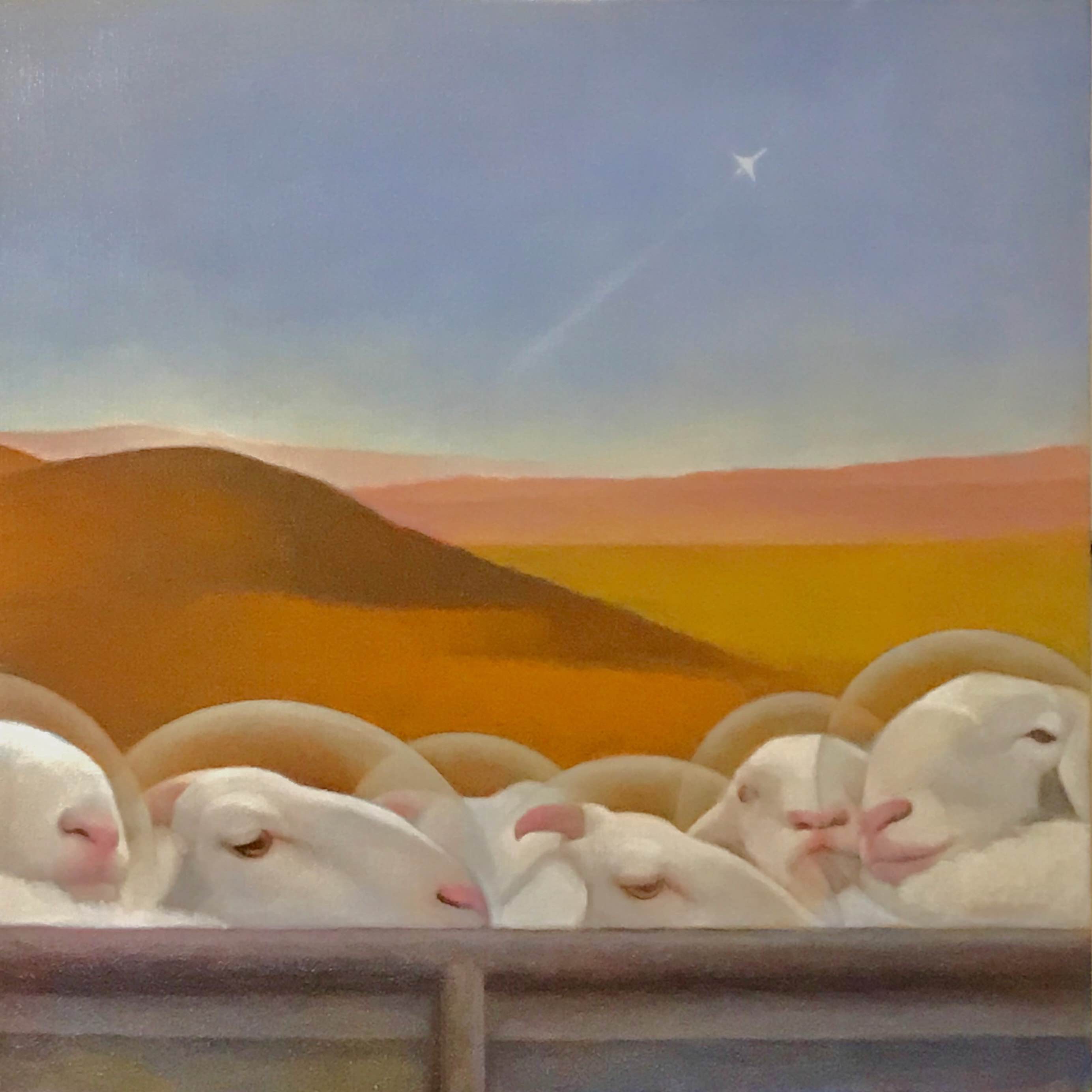
应许之地的太空羊 Space Sheep of the Promised Land
一如摩西引领族人穿越旷野,众生亦如羔羊,被历史驱向宇宙的新境。这是新神的应许之地,也是未知的荒漠。多数个体,不过在宏大叙事之中,谋求一隅微小的立足之地。
废土的车辆载着羊群驶向终点,火箭仍在不断运来新的抵达者。他们是奔赴星海的先驱,亦是被投向深空的,沉默的羔羊。